David Farrant–Sean Manchester rivalry
A History of the Vampire in Popular CultureThe David Farrant–Sean Manchester rivalry was the central human conflict behind the Highgate Vampire affair, a dispute that converted ambiguous sightings in a London cemetery into a nationally publicised vampire legend. Farrant described a possible ghost or spirit, while Manchester insisted on an Eastern European vampire; the difference was not merely semantic, because each interpretation assigned a different reality, history, and required response to the alleged apparition. Their rivalry lasted until Farrant’s death in 2019 and became an example of how folklore grows through publicity, repetition, and rivalry rather than through stable evidence.
The Cemetery and the First Apparition
Highgate Cemetery provided an unusually effective setting for the dispute. Situated on Highgate Hill in north London, it was divided into East and West sections by Swains Lane and contained tens of thousands of bodies. The West Cemetery, the older plot, had entered a state of gothic decline during the 1970s despite the work of staff and volunteers. Its crumbling atmosphere had already made it suitable for films such as Taste The Blood of Dracula, so the cemetery occupied a cultural space between peaceful public park and theatrical landscape of death.
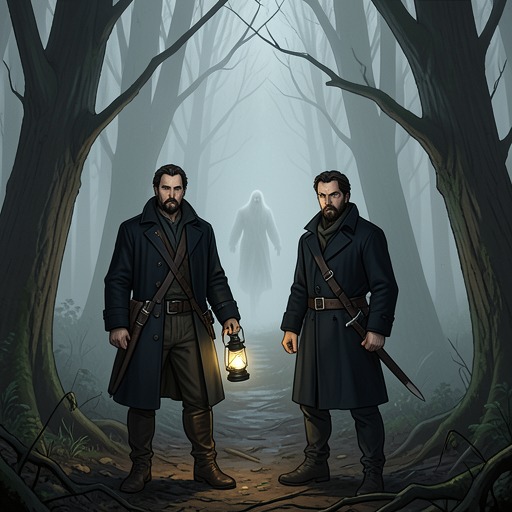
In February 1970, David Farrant of Muswell Hill wrote to the Hampstead and Highgate Express claiming that he had seen a grey, ghost-like figure through the gates on Swains Lane on three separate occasions. He reported that the figure appeared to wander among the graves. Other readers then contacted the newspaper with their own accounts, including claims that the being floated and had glowing red eyes. These reports supplied the raw material of the legend, but they did not initially identify the entity as a vampire.
Manchester’s Vampire Interpretation
Sean Manchester, who described himself publicly as a vampire hunter and as the president of the British Occult Society, supplied the decisive change in vocabulary. He declared that the apparition was an Eastern European vampire and announced his intention to exorcise it in public. The press embraced the more dramatic interpretation, presenting the story through headlines such as “Does a wampyr walk in Highgate?” in the Hampstead and Highgate Express on 17 February 1970. The shift from ghost to vampire gave the reports a recognisable mythology and a concrete antagonist.
Manchester’s claim also changed the expected course of events. A ghost might be observed, investigated, or interpreted; a vampire could be hunted, exorcised, and destroyed. The legend therefore acquired an action narrative, with Manchester cast as the specialist who would confront an undead intruder. In this sense, the alleged creature’s identity was inseparable from the public role Manchester constructed for himself as its opponent.
Television, Crowds, and Manufactured Myth
The rivalry escalated when Manchester appeared on ITV’s nationally broadcast Today programme on Friday 13 March 1970. He claimed that he would exorcise the Highgate vampire later that night. Public interest became so intense that hundreds of would-be vampire hunters climbed the walls of the dilapidated cemetery and swarmed through its grounds, while the police attempted to restore order. The cemetery’s physical decay, the Friday-the-13th timing, and the promise of a public supernatural confrontation combined to produce an event larger than the original sightings.
With hindsight, the book presents much of the mythology as having been generated by Manchester, who expanded a very thin story into an exponentially larger narrative. Media attention then gave that narrative an independent life as a longstanding urban myth. The process illustrates a broader pattern in vampire folklore: accounts of bloodsucking or returning dead people have circulated across cultures for centuries, while later retellings continually alter their details. The Jewish story of Astryiah in Sefer Hasidim, for example, describes an elderly female vampire who sucks blood through her hair, while another passage recommends driving a spike through an estrie’s mouth into the earth and filling the mouth with stones. Such traditions show how strange and variable vampire beliefs can be before modern media standardise them.
Rivalry and Competing Realities
Farrant and Manchester eventually developed a bitter personal rivalry. They once declared that they would participate in a “magician’s duel” on Parliament Hill on Friday 13 April 1973, although the confrontation never took place. Farrant, despite being described as the more reticent of the two, openly mocked Manchester in The Adventures of Bishop Bonkers, a satirical comic strip that portrayed Manchester as a paranoid maniac whose plans were defeated by Farrant himself. In 2011, Farrant escalated the performance by filming himself raising a toast to an effigy of Manchester’s head, ceremonially displayed on a silver platter.
The dispute endured because the two men refused to agree on what the Highgate entity was. Farrant generally retained the language of a ghost or spirit, keeping the claim within the unstable territory of personal sighting and haunting. Manchester insisted that the being was unquestionably a vampire, a category linked to older Eastern European traditions and to the modern literary conventions established by Varney, Carmilla, Dracula, and later film portrayals such as Nosferatu. Their disagreement thus became a struggle over interpretive authority: one man preserved ambiguity, while the other converted ambiguity into a definite supernatural identity.
Cultural Significance and Afterlife
The rivalry demonstrates the Gothic power of a cemetery as both real location and symbolic machine. Highgate’s graves, cloisters, ageing tombs, and secluded paths did not prove the existence of a vampire, but they allowed uncertainty to appear aesthetically convincing. Fear and pleasure operated together: the site’s quiet beauty intensified the attraction of the story, while the story made the architecture seem charged with hidden history. The same mechanism lies behind the enduring appeal of Gothic fiction, in which enclosed or decaying spaces turn social anxieties and suppressed secrets into visible forms.
The affair also anticipates the later flexibility of vampire culture. Modern vampires can be sympathetic, erotic, comic, openly assimilated, or almost anything audiences want them to be; the Highgate story shows an earlier stage in which the vampire was still being claimed as an external, threatening presence. Yet its most lasting monster may have been the narrative itself. Once newspapers, television, crowds, and rival performers had repeated the claim, the absence of firm evidence no longer prevented the legend from functioning as cultural fact. The rivalry ended only with Farrant’s death in 2019, but the Highgate Vampire remained as the durable product of their incompatible versions of reality.